
May 11, 2026

The Problem with Global Carbon Markets and What Needs to Change

Carbon markets were designed around a compelling premise—that private finance could flow to where forests are most at risk, rewarding the communities and landowners who protect them while helping companies take responsibility for their emissions. For anyone working in climate or conservation, the underlying logic still holds. The world's forests provide essential ecosystem services, capture and store huge amounts of carbon, face enormous pressure, and need sustained economic incentives if they are to survive.

So why has the voluntary carbon market so consistently fallen short of this promise?

Over the past decade, the sector has faced mounting evidence that many carbon credits—particularly those issued for forest conservation—have not delivered the climate outcomes they claimed. There have been well-documented cases of social harm to indigenous and local communities. Scientific analysis has repeatedly found that the methodologies used to calculate emissions reductions were prone to significant overestimation. Trust in the market, among both buyers and civil society, has eroded.

However, this is not a reason to abandon the idea of climate finance for nature. It is a reason to understand what has gone wrong, and to ask what a more inclusive, just, and transparent model can look like.

The Measurement Problem

The most fundamental technical challenge in forest carbon markets is the problem of additionality: demonstrating that a forest protected under a carbon program would otherwise have been lost and its stored carbon released into the atmosphere. Credits are issued based on the difference between what happened and what would have happened in the absence of the project; an inherently counterfactual calculation that is very difficult to get right. 

The problem is compounded by the incentive structures of the voluntary market, which tend to overstate threats in order to generate and sell more credits. These are the so-called phantom credits: certificates issued for emissions reductions that never actually occurred, whether because projects never existed, failed to operate, or significantly exaggerated their environmental benefit. The result is a net increase in atmospheric carbon while allowing companies to claim carbon neutrality.

Sadly, phantom credits are found throughout both the voluntary and compliance markets. A major investigation in 2023 by The Guardian, Die Zeit, and SourceMaterial found that the vast majority of rainforest offset credits certified by Verra—at the time the world's largest carbon credit certifier—did not represent genuine emissions reductions. Peer-reviewed research published in Science, examining 26 REDD+ projects, found limited evidence of actual deforestation reduction compared to control areas, with some analyses suggesting that the threat to forests had been overstated by several hundred percent in a significant share of projects.

These findings reflect a methodological vulnerability that has been present in the market's architecture from early on, and that the standard-setting bodies have been slow to address. For any company purchasing carbon credits as part of a sustainability strategy, the implication is clear: not all credits are equal, and the label of certification alone is not sufficient assurance of real-world impact.

The Dispossession Problem

While the technical integrity of carbon projects matters, perhaps even more important is the question of who benefits when a carbon project is implemented, and who bears the costs.

The voluntary carbon market emerged during a period when conservation thinking was still heavily influenced by the fortress conservation model: the idea that protecting nature meant separating it from human activity. Applied to carbon finance, this produced projects that treated local and indigenous communities as a complication to be managed rather than the central actors in any viable long-term conservation strategy.

The results of this exclusionary approach have been severely damaging to communities around the world. Research published in The Lancet Planetary Health catalogued patterns of land dispossession, forced relocation, and conflict in carbon projects across the Amazon, Central Africa, and Southeast Asia, often resulting from a failure to obtain genuine Free, Prior, and Informed Consent from affected communities. Human Rights Watch documented specific cases in Cambodia where indigenous farmers lost crops and livelihoods without warning or consultation under a major REDD+ project. In Peru, community members in the Cordillera Azul region reported displacement without compensation despite a substantial carbon deal involving their land.

The contracts themselves have been a vehicle for exploitation. In Malaysian Borneo, for example, a 100-year REDD+ agreement was signed with a Singaporean company that effectively locked communities out of their own forests for a century, with virtually no details about how revenue would flow back to them and no meaningful prior consultation. Contracts in the Amazon have similarly lasted 30 to 40 years, preventing indigenous peoples from using their own land, and containing abusive clauses with no severance provisions if the community suffers losses.

It is worth reflecting on why this matters beyond the immediate human harm. Communities that live in and around forests are their most effective long-term guardians. Research across Latin America consistently shows that forests under indigenous and community stewardship retain greater biodiversity, store more carbon, and lead to lower deforestation rates than those managed by external parties. Conservation finance that alienates or displaces these communities does not just cause social harm, it also undermines the ecological outcomes it is supposed to produce.

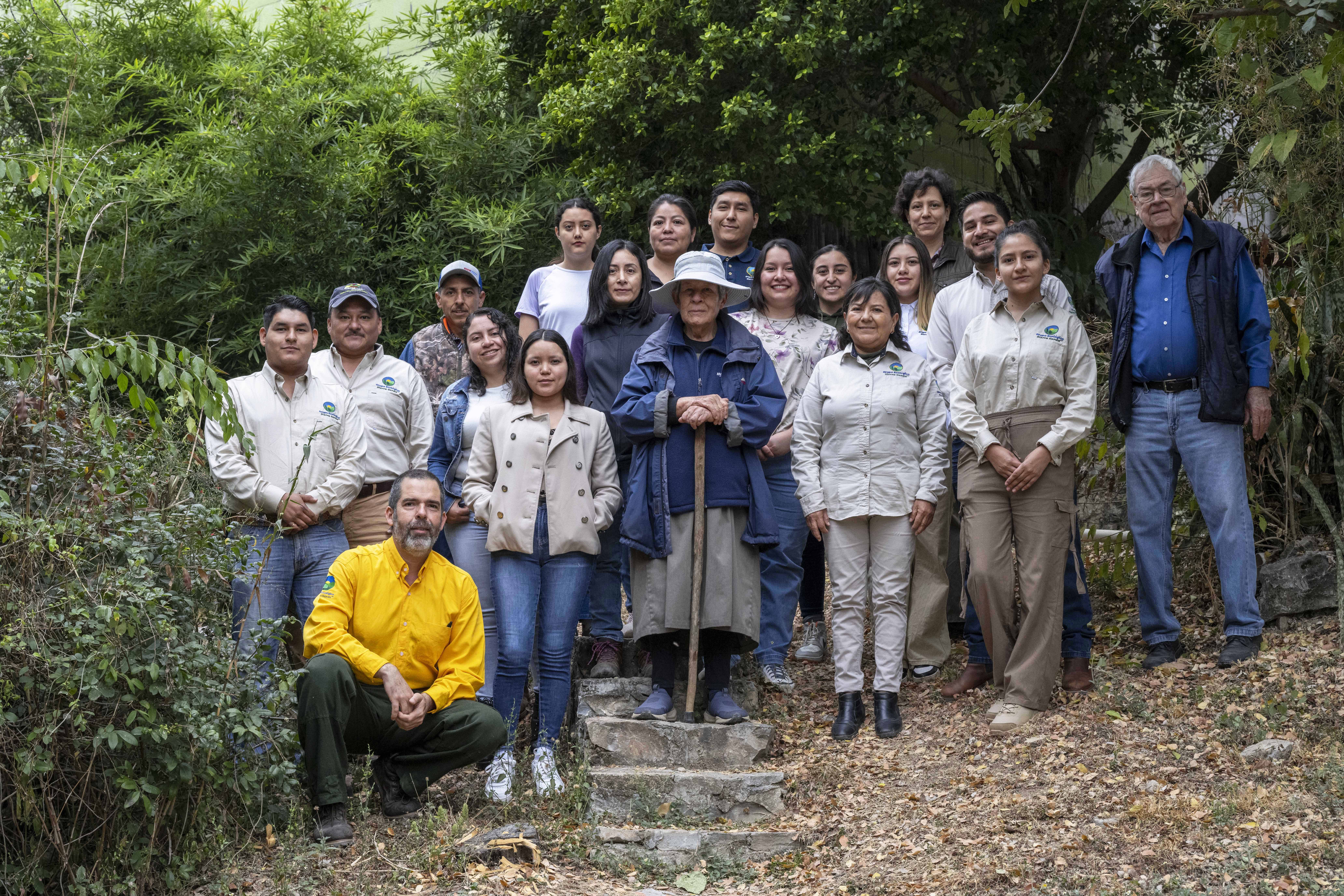
A participating landowner in the Carbono Biodiverso program.

What Needs to Change

The problems with global carbon markets are not merely technical; a matter of better measurement and tighter verification protocols. They are structural. The current model was designed, implicitly or explicitly, to maximize profits for project developers and reduce the cost of carbon for corporate buyers, which has meant minimizing the share that reaches the communities whose land and stewardship make carbon capture possible in the first place.

For carbon markets to work as a genuine climate and conservation solution, this reality has to change. This means adhering to certain essential principles:

  1. Communities must be the primary beneficiaries, not afterthoughts. In a system where the value of a forest depends entirely on the people who live alongside it, manage, and protect it from day to day, those people must receive the majority of the financial benefit, not a token share after project developers, auditors, intermediaries, and investors have taken their cuts.
  2. Contracts must reflect genuine consent and be renewable, not generational traps. A 30-, 40- or 100-year contract signed under conditions of limited information, power imbalance, and inadequate translation is not consent. Communities need the ability to renegotiate and exit contracts that do not benefit them. Conservation commitments made freely, year after year, are far more durable than those locked in by a contract that a child born today will still be living under in old age.
  3. Direct measurement must replace conjectural estimates. Carbon credits need to reflect actual carbon removed by real world forests, not scenario-based projections, if they are to have any value. Monitoring, reporting, and verification should be carried out by bodies that have no financial interest in the outcome, using scientifically robust methods that are publicly available and subject to peer scrutiny. The selective use of baselines and the overstatement of avoided deforestation are problems that independent, transparent science can detect and correct. 
  4. Forest protection cannot be divorced from broader community development. The structural reason that forests are at risk in most of the Global South is that the people who live near them have too few economic alternatives and too little incentive to protect them. A carbon protocol that addresses only the carbon and not the underlying economic reality will produce results that are fragile at best and fraudulent at worst.
  5. The local must take precedence over the abstract. Money raised for forest conservation should stay close to the forest it is conserving. The longer and more complex the chain between an emission and its supposed offset, the more opportunity there is for financial intermediation, greenwashing, and the evaporation of benefits. Local protocols, grounded in local governance, local verification, and local distribution of revenue, are inherently more accountable than international markets where it is, as Carbon Market Watch has documented, practically impossible to trace how much of the money raised actually reaches communities.

Carbono Biodiverso

The principles described above may seem straightforward, but they are genuinely difficult to find in practice. The Carbono Biodiverso program is a working example of what it can look like when a program is built around them from the ground up. It was developed specifically for the needs and realities of the Sierra Gorda Biosphere Reserve; one of Mexico’s most ecologically diverse protected areas, with various types of ecosystems that are home to threatened species like the jaguar, black bear, puma, and military macaw, and with the central goal of benefitting local communities and landowners.  

The Carbono Biodiverso program, officially launched in 2021, is the result of over a decade of carbon work by Grupo Ecológico Sierra Gorda (GESG) amongst the communities of the Sierra Gorda and it became the foundation for an innovative climate policy developed by the Secretaría de Desarrollo Sustentable (SEDESU) of Querétaro known as the Sello Querétaro. The Sello Querétaro is a state-level carbon tax on industrial emitters that allows companies in Querétaro to reduce their taxable base by up to 20% by funding certified forest conservation projects within the state itself. This fiscal instrument was the final piece needed to complete a local protocol that ensures that the carbon is removed and verified locally, the money stays in Querétaro, and the companies that benefit from the clean air and water of the Sierra Gorda are the same ones being asked to pay for it.

As GESG director Pati Ruiz Corzo has put it: "Our certificates are the result of a public policy and do not follow the rules of the market." In other words, the Carbono Biodiverso certificates are not commodities traded at arm's length between a multinational and a project developer on another continent. They are instruments of place-based, community-rooted conservation that rest on rigorous scientific monitoring of actual forest ecosystems, with government accountability and independent verification built into their structure from the beginning.

The program was also designed around an understanding of what makes the Sierra Gorda's situation distinctive. Unlike many protected areas, around 70% of the Sierra Gorda's forests are in private hands and the rest are ejidos or communal property. This means that conservation, here, is inseparable from the economic decisions of individual landowners and communities. The forests of the Sierra Gorda belong to the people of the Sierra Gorda, and for them to remain standing, local people need a reason to protect them that makes economic sense—not just moral sense. This is why the local protocol is structured around direct annual payments to landowners. It requires that the vast majority of every carbon transaction flows directly to the people who protect the forest, with the remainder reinvested in the community rather than going to distant investors. In 2025, the more than 170 landowners who participated in the program and are protecting over 40,000 hectares of cloud forest, oak woodland, pine-oak, and tropical deciduous forest ecosystems, received payments far above what they would have earned from traditional activities like cattle grazing and agriculture, turning forest conservation into a genuine economic opportunity and livelihood.

The Forest as Economic Engine

What GESG and the Carbono Biodiverso model demonstrate is that conservation and economic development are not contradictory goals. They become mutually reinforcing when the financial architecture is designed around the people who actually live in the landscape.

The Sierra Gorda sits in a region where the vast majority of the population faces economic hardship, with a high dependency on subsistence farming and, in some areas, significant reliance on remittances due to limited local economic opportunities. The Carbono Biodiverso model does not treat that economic reality as a separate issue. It treats it as the central challenge that any serious conservation effort must address. By making the protection of forests more financially attractive than their destruction and by ensuring that the benefits flow to landowners and local communities rather than to distant investors, it creates what the global carbon market has so far only promised: a true conservation economy.

The lesson for the global debate over carbon markets is not that markets should be abandoned. It is that they need to be rebuilt around a different set of priorities. The ecosystem services of forests are worth something and the people who live in and protect those forests must be the primary beneficiaries of that value. Anything short of that is not conservation. It’s a new form of exploitation.